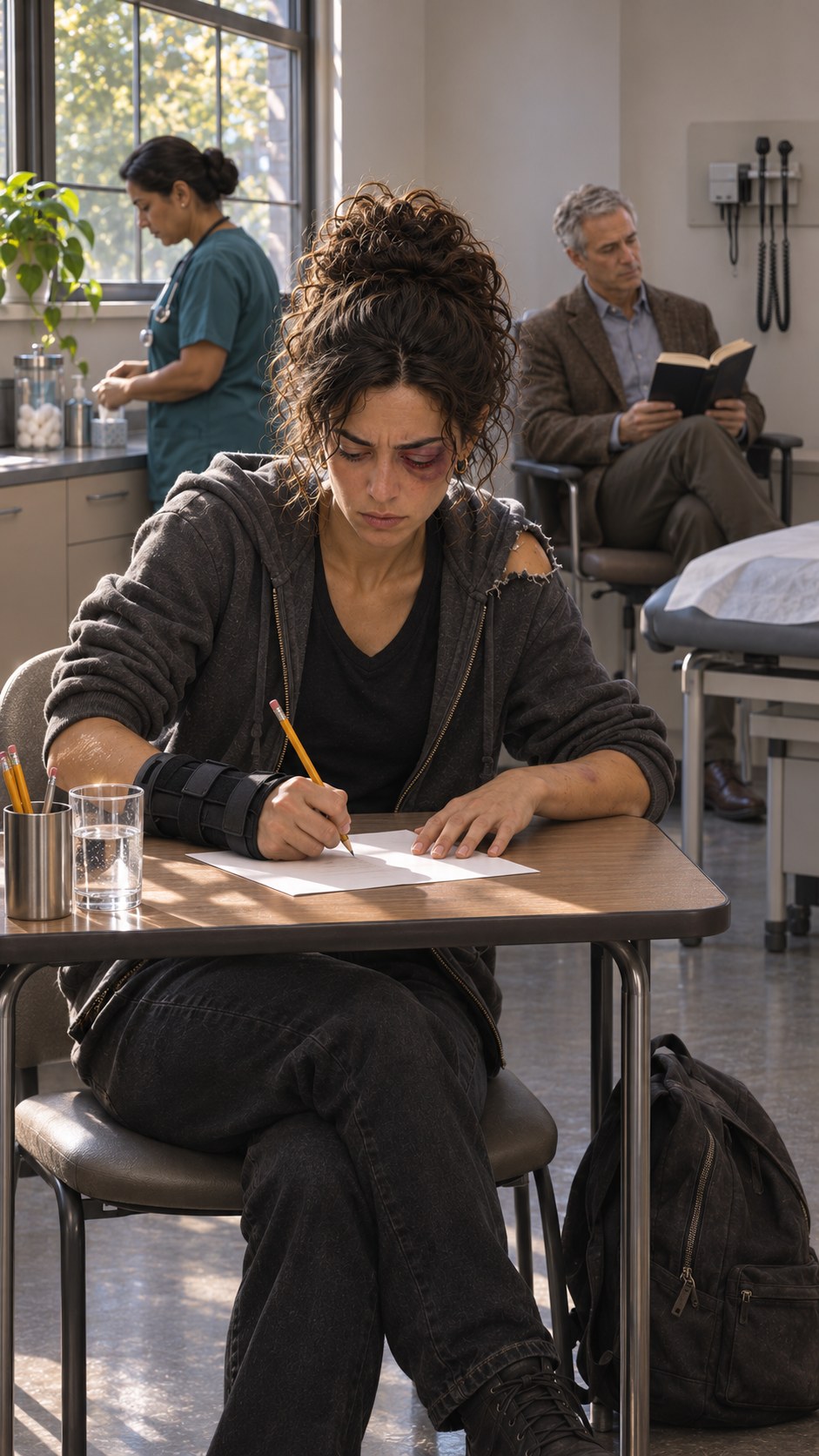
The Sitting
Story · Eight narrated parts
Research behind the story, with sources and fictional choices distinguished.
Safety, privacy, student choice and institutional discretion behind the nurse’s room and the professor’s quiet help.
How can practical help preserve Sloan’s agency, and which examination decisions remain specific to the fictional institution?
SAMHSA’s trauma-informed guidance emphasizes safety, collaboration, empowerment and reducing retraumatization. Applied to a story, these principles suggest offering practical choices and avoiding unnecessary public questioning. That application is an editorial inference, not evidence that this exact scene is an established clinical protocol. [1]
UW–Madison advises students with temporary conditions to contact instructors about alternatives and describes informal exam arrangements. Its guidance gives a real example of flexibility; it does not govern Horizon’s scholarship selection. [2]
The University of Washington distinguishes adjustments instructors may offer from formal disability accommodations determined by its specialist office. The examples demonstrate institutional processes and limits, rather than unlimited professor authority. [3]
The only sitting for Horizon’s scholarship and internship, the private room, full allotted time and thirteen additional minutes are authored circumstances. The sources do not establish that thirteen minutes is a validated compensation for Sloan’s injuries, that an unannounced extension is universally permitted, or that every selection exam could be handled this way.
The neighbor’s call, two officers, restraint and Derek’s same-morning custody are fictional events. The city and jurisdiction are unspecified. No particular arrest duty, charge, release time or guaranteed safety outcome is claimed. The call does not establish that Sloan made it, and the officers’ arrival does not itself guarantee that violence will stop.
Read or watch The Sitting, including all eight narrated parts. The professor offers a private route to the exam; the nurse asks clinical questions, monitors Sloan and requests hospital follow-up. Sloan still has to do the work. The open door at the end conveys a moment of nearby support, not a completed recovery or resolution of every danger.
Internal research threads: SLO-RES-02, 03, 12, 14 and 16. Police logistics are retained as setting-dependent fiction; academic guidance is explicitly institution-specific.
Developed through the team’s research and review, with creative direction by William Byrd and contributions from Rowan, Claude, Jim, and Grace. Public source links and evidence limits were checked for this publication on November 16, 2026. Research grounds the fiction; it does not certify every event as medically or institutionally approved.
Explore each character or card, then follow its research tags back here.
Story · Eight narrated parts
Research behind the story, with sources and fictional choices distinguished.
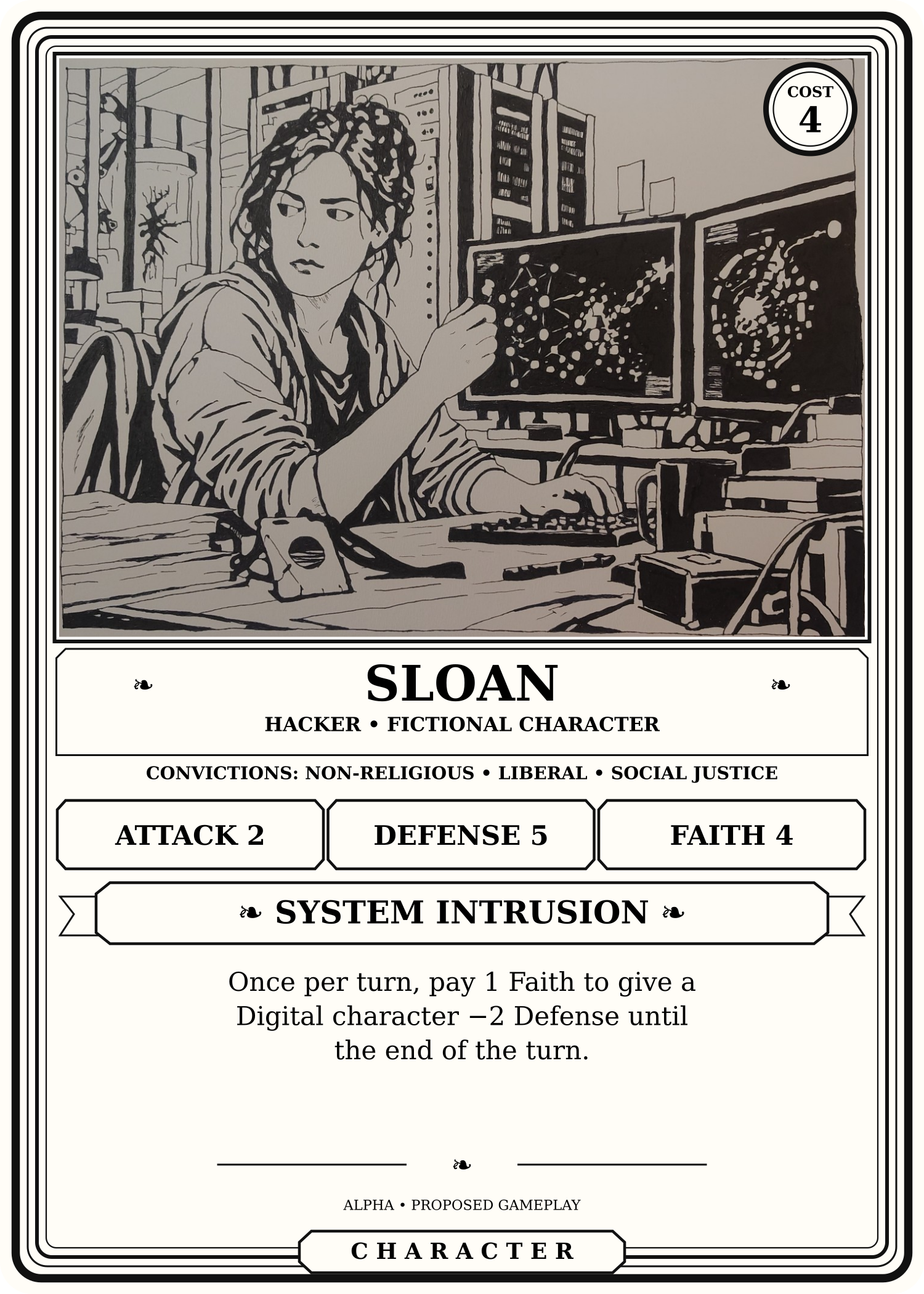
Character
Background research connected to Sloan’s examination in The Sitting.